
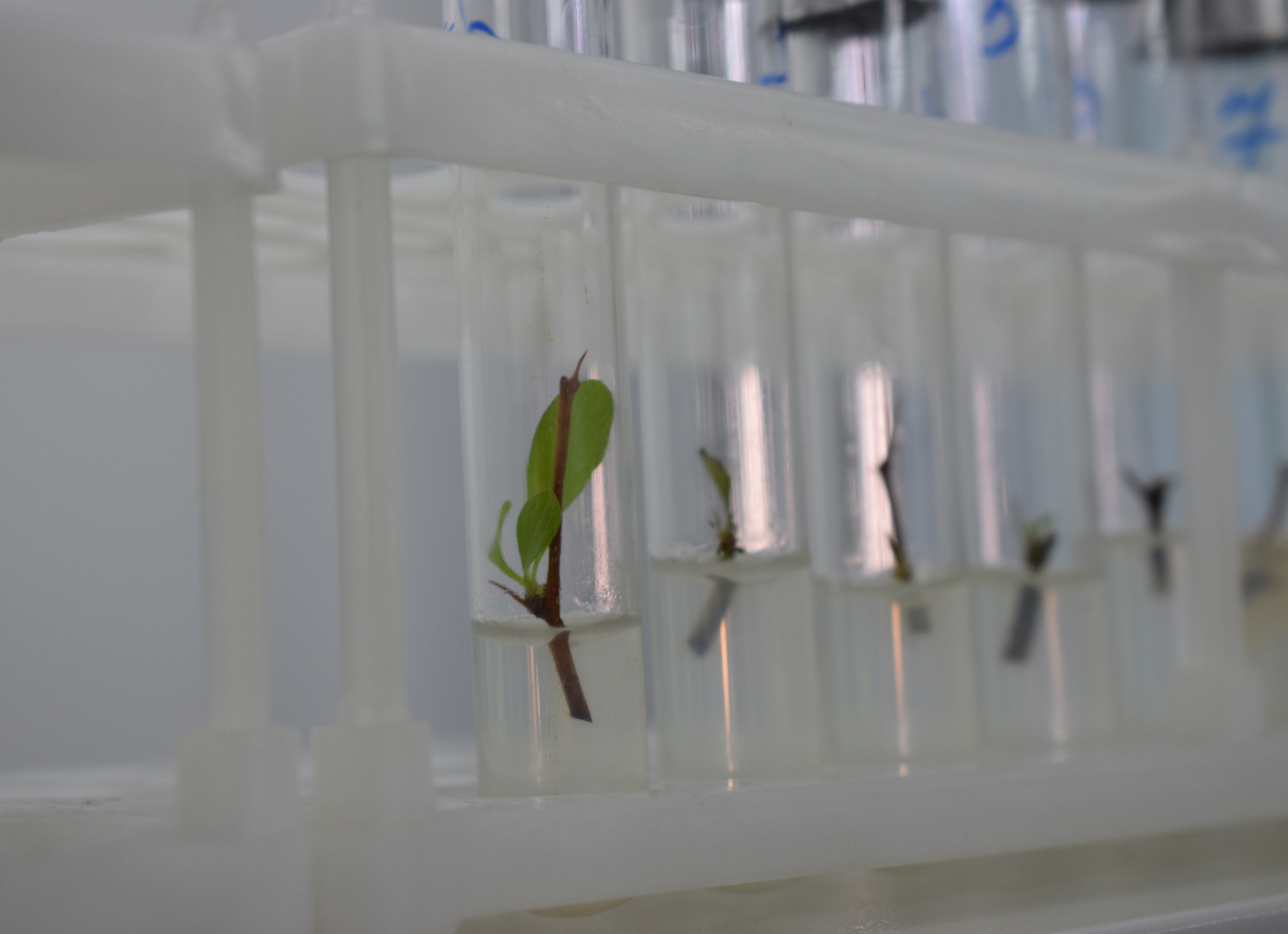
Microclonal Plant Propagation
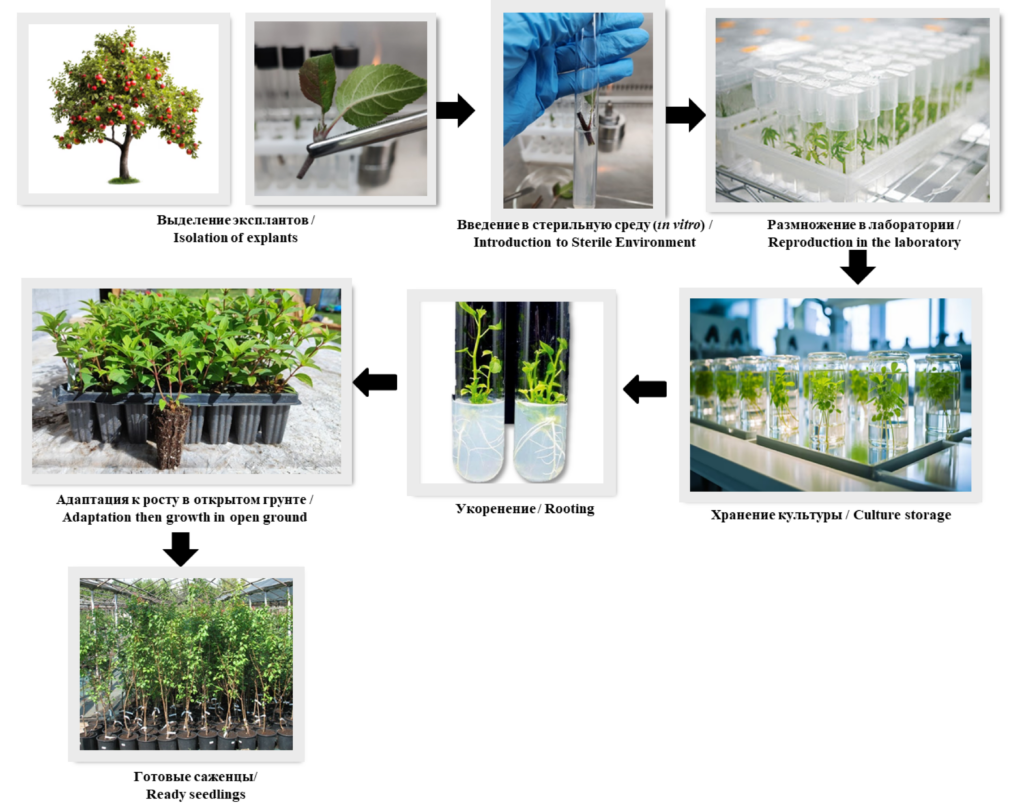
Microclonal propagation of plants is one of the methods of vegetative reproduction under in vitro conditions. Microclonal propagation, also known as in vitro cloning, is a method of mass propagation of plants in sterile laboratory conditions. The essence of the method is to create identical copies of the original plant using its cells, tissues, or organs. This method is widely used in agriculture, horticulture, and forestry for the reproduction of valuable plant varieties.
Stages of Microclonal Propagation:
1
Selection and Preparation of Starting Material
A piece of the plant, such as a bud, meristem, or part of a stem, is taken for propagation. This material must be healthy and free from diseases.
2
Sterilization
The starting material undergoes sterilization to eliminate any microorganisms. This step is crucial because in vitro culture media are very susceptible to contamination.
3
Cell or Tissue Culture
The sterile material is placed on a nutrient medium containing essential growth elements (vitamins, carbohydrates, mineral salts, hormones). The medium often contains growth hormones such as cytokinins and auxins, which stimulate cell division and shoot formation.
4
Shoot Proliferation
Under the influence of nutrients and hormones, new shoots begin to develop from the starting material. At this stage, several shoots can arise from a single cell or tissue.
5
Root Regeneration
Once the shoots have formed, they are transferred to another medium that promotes root development.
6
Acclimatization
When the plants have developed a complete root system, they are transferred to conditions that are close to natural ones (greenhouses or laboratories with controlled humidity and temperature). Gradually, the plants are adapted to the external environment.
Advantages of Microclonal Propagation

Genetic
Uniformity
All plants are genetically identical to the original plant, preserving its unique traits.
High Propagation
Rate
A large number of plants can be quickly obtained.
Healthy
Plants
Propagation occurs in sterile conditions, minimizing the risk of disease contamination.
Conservation of Rare and
Endangered Species
The method is used to restore populations of rare plants.
Technology diagram
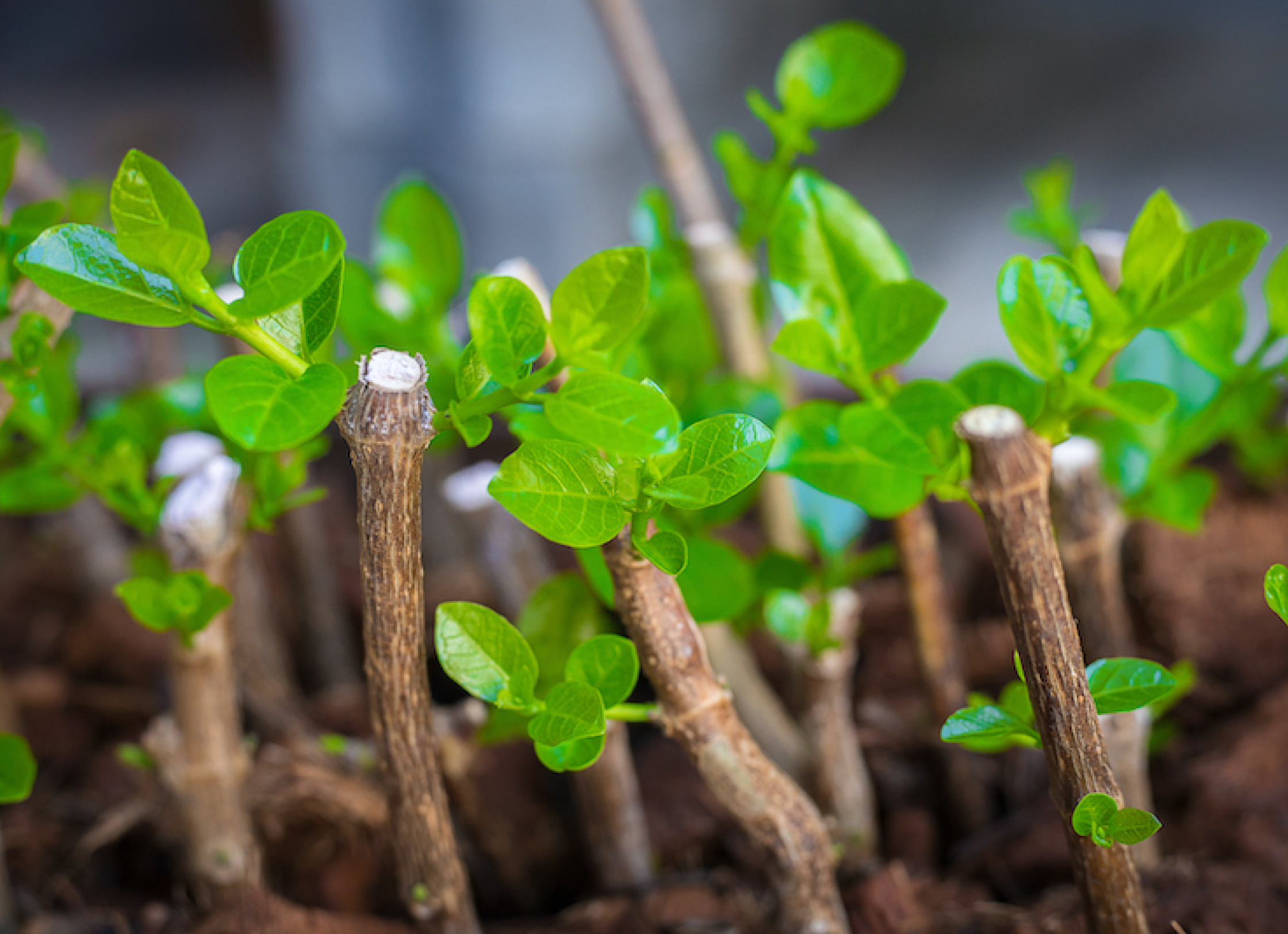
Green cuttings of plants
This is a method of vegetative reproduction, in which young, green, non-woody shoots of the plant are used. This method is especially popular in horticulture and forestry for the propagation of ornamental and fruit crops
Stages
green
cuttings
1
Selection and preparation of cuttings
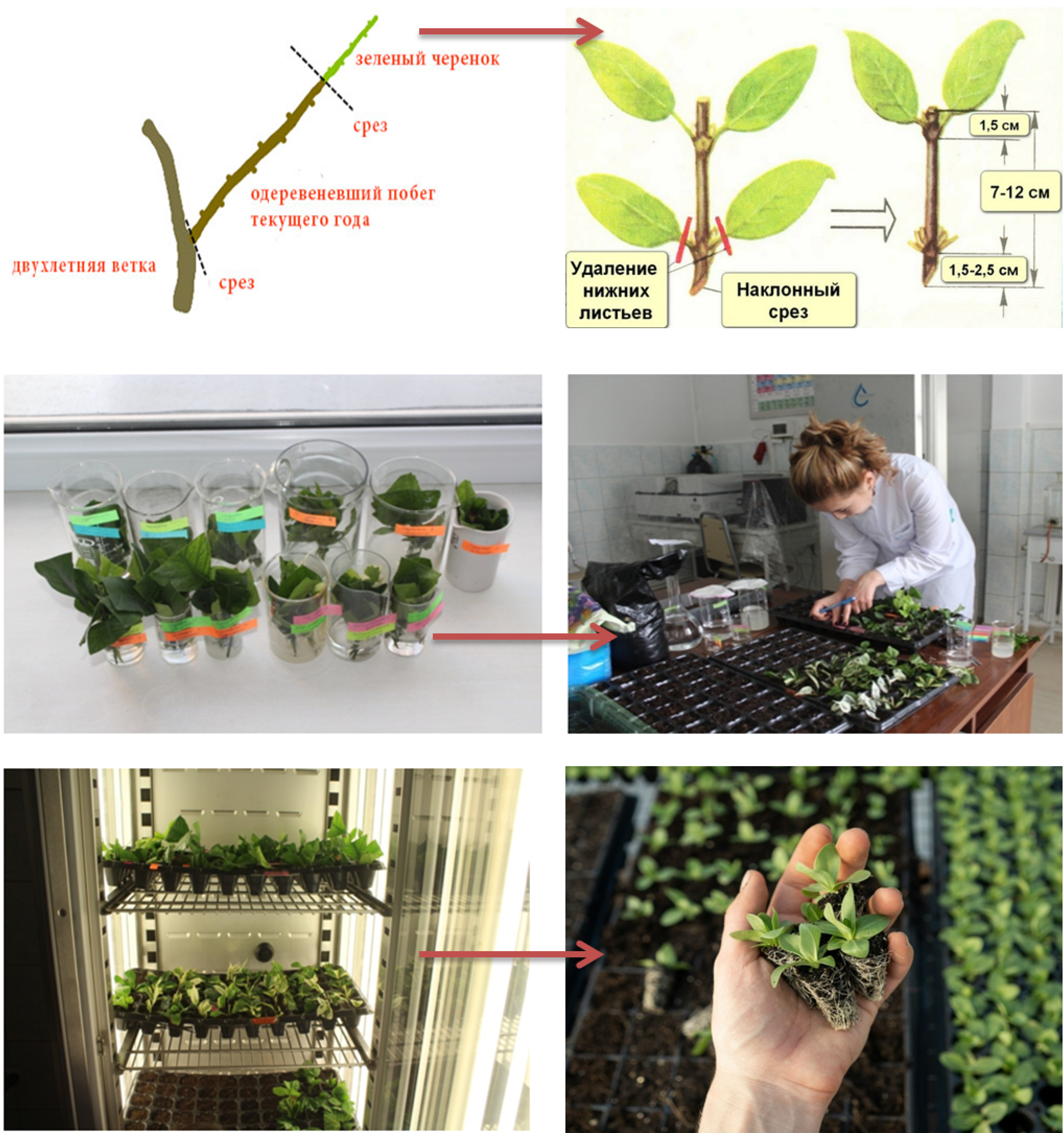
Cuttings for reproduction are taken from young, actively growing shoots of the current year. The length of the stalk is usually from 5 to 15 cm, and there should be several leaves on it. The lower part of the cuttings, which will be placed in the soil, is cleaned of leaves to prevent rotting
2
Trimming
The upper cut of the cutting is made straight, just above the node (the point where the leaf attaches), while the lower cut is made at an angle, directly below the node. This is important for better rooting.
3
Treatment with Growth Stimulators
To increase the chances of rooting, cuttings are often treated with special root-inducing substances (e.g., heteroauxin or rooting powder). These substances accelerate root formation and improve the survival rate of the cuttings.
4
Planting Cuttings
Cuttings are planted in a prepared moist soil mixture, typically consisting of peat and sand in a 1:1 ratio or perlite. The soil should be light and well-aerated. Cuttings are buried to the node, from which the roots will develop.
5
Creating a Greenhouse Effect
To provide high humidity and stable temperature for the cuttings, they are covered with plastic wrap, glass, or placed in a greenhouse. This helps prevent moisture evaporation and creates optimal conditions for rooting.
6
Care for Cuttings
Cuttings should be regularly sprayed with water, and stable temperature (usually 20-25°C) and high humidity should be maintained. Within a few weeks, roots will begin to form on the cuttings. This process can take from 2 to 6 weeks, depending on the species of the plant.
7
Transplanting Rooted Cuttings
Once the cuttings have rooted, they can be transplanted into separate containers or into the open ground. Before planting in the open ground, the plants need to be gradually acclimatized to external conditions by reducing humidity and temperature.
Advantages of
Green
Cutting
Preservation of
Varietal Qualities
Since this is a vegetative method of propagation, new plants fully retain the properties of the parent plant
Simplicity
and Accessibility
The method does not require complex equipment and can be used by both professionals and gardening enthusiasts.
High
Speed
Some plants can root within a few weeks, making the method quick and effective.
Technology diagram

Funded JSC
“Science Foundation”
“The present project is carried out within the framework of implementation of grant financing of commercialization of RSSTA, financed by “Committee of Science of the Ministry of Science and Higher Education of the Republic of Kazakhstan”


 адрес: ул. И.Жансугурова 187а,